Night Bazaar Muay Thai, reserved seat
A card of bouts at the ring inside Chiang Mai's Night Bazaar, from rising fighters to experienced ones. Child rates exist; food, drinks and transfers are extra; no re-entry.
Night Bazaar · Chiang Mai
A ring inside Chiang Mai's Night Bazaar hosts a card of Muay Thai bouts several nights a week, with reserved seats.
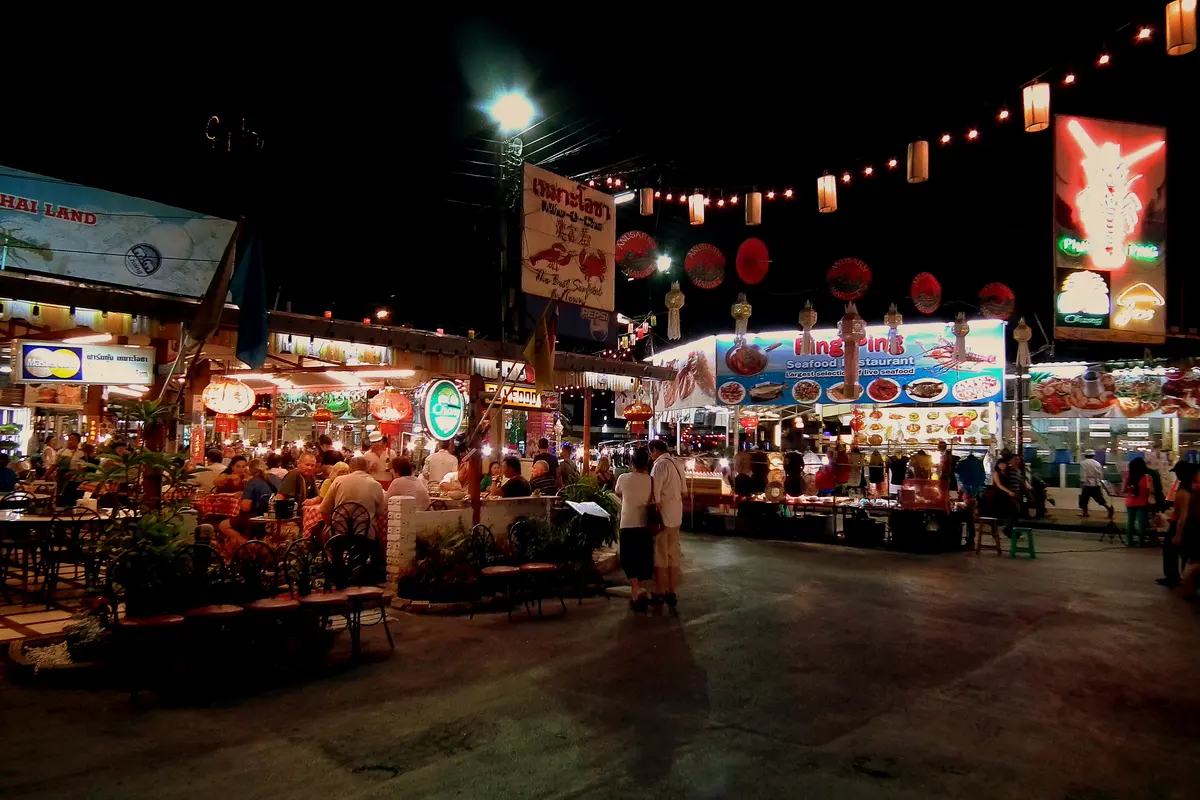
The bazaar trades on around the ring, so arrive early and eat before the first bell.
The answer, up front
Yes, if you want to see a live card of Muay Thai once and like the idea of it happening inside a working night market. The ticket gets you a reserved seat at a ring inside Chiang Mai's Night Bazaar, with bouts that run from rising fighters to experienced ones. Tickets are also sold at the gate, so booking is not the only way in; what it buys you is a seat held for your date. Arrive early, eat first, and keep in mind that leaving the venue ends your night, since re-entry isn't allowed.
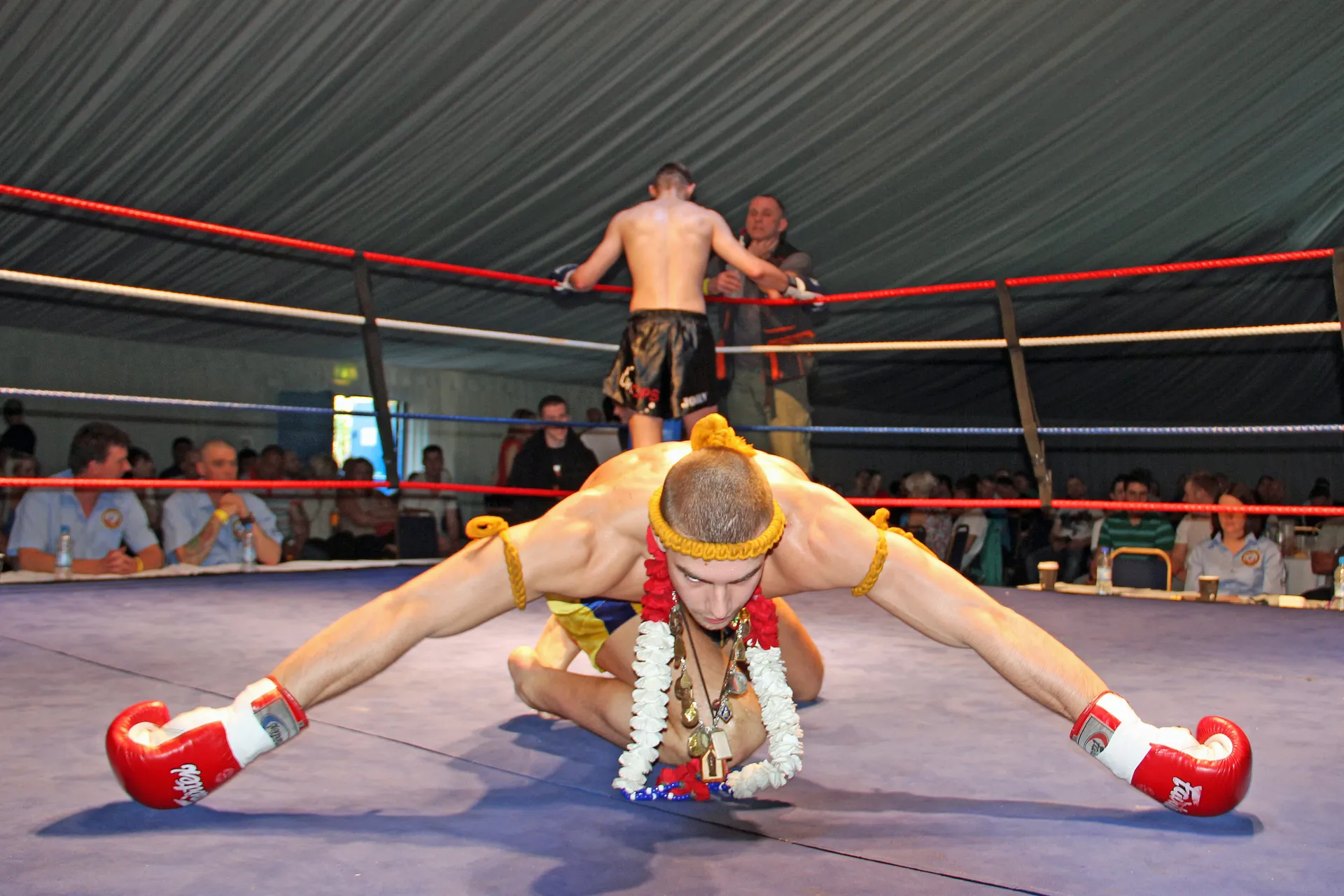
An evening card of Muay Thai bouts in a boxing ring set inside the Night Bazaar, the market east of the old city's moat. Before each bout the fighters perform their salute to live music, then the rounds begin. Your voucher is scanned at the stadium gate and you take your reserved seat.
It isn't a quiet theatre or a big televised arena. The ring sits in a market, so expect noise, stalls trading nearby and an informal crowd. Nor is it a dinner show: you pay for anything you eat or drink, and you can't carry your own in. And it isn't a class. You watch; you don't train.
The bazaar ring at a glance
Gate to final bout
The calendar and your voucher carry each night's start time. The promoter decides the running order, so read what follows as the outline of a typical evening rather than a programme.
Before
Dinner and drinks are not in the ticket, and outside food or drink is not allowed in, so eat at the bazaar's stalls before you head for the gate.
Gate
Go straight to the stadium entrance and show the QR code on your phone. Staff may ask to see ID, so carry it.
Seat
Booking holds a seat for your date. Arrive early anyway: walkways fill as the start approaches, and the first salute is worth seeing from your seat.
Ritual
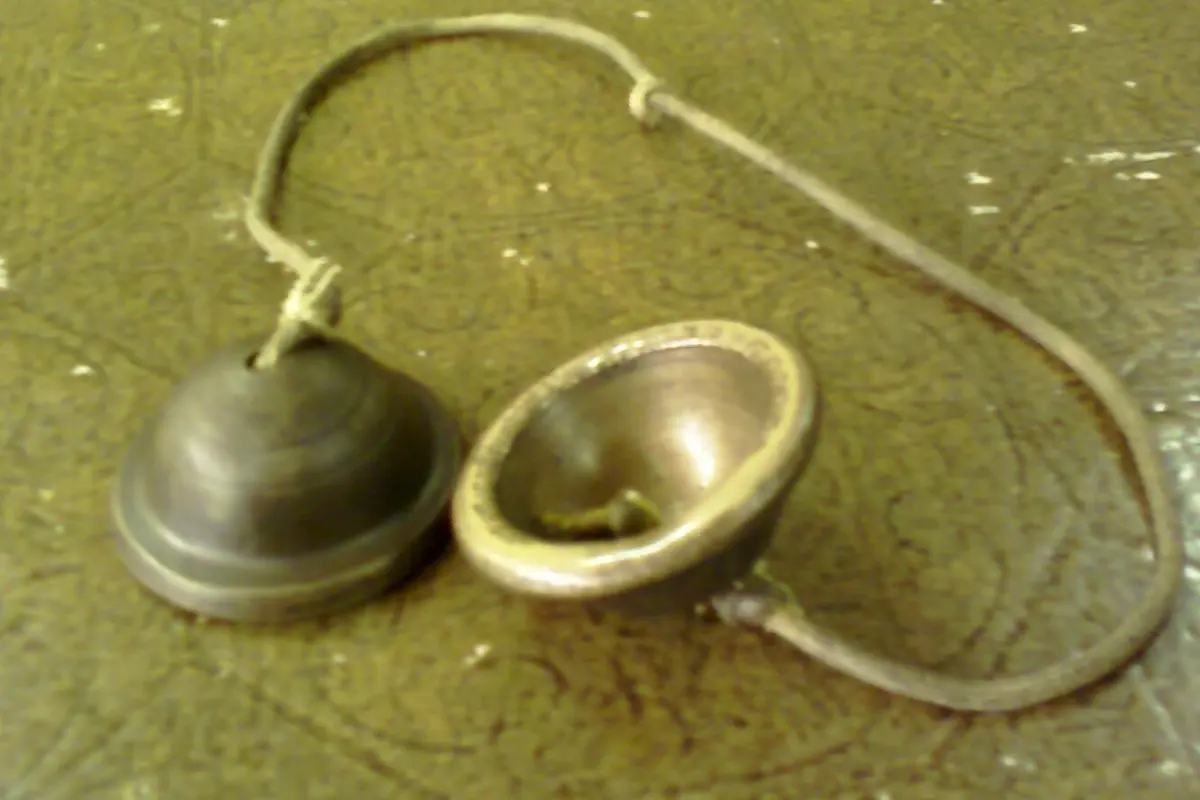
One by one, the fighters walk a slow lap of the ring, pause to bow in each corner and then dance the ram muay, while the corner band plays the reed pi, the drums and the cymbals.
Bouts
Bouts follow one another through the evening, from rising fighters towards experienced ones. Each opens with its own salute.
Leaving
There is no re-entry. Step out to the market mid-card and the same ticket will not let you back in.
Ringside customs
Fighters and match-ups change from night to night and are the promoter's call, so none are named here. What stays constant are the customs and rules below, and knowing them helps you read what is happening in the ring.
A fighter's first act in the ring is a slow walk around it, counter-clockwise, pausing to pray in each corner. At every corner come three bows, one each for the Buddha, his teaching and the community of monks. The name joins wai, the pressed-palms greeting, with khru, a teacher: the whole rite is thanks to those who trained the fighter.
Then comes the ram muay, a dance whose moves are traditionally linked to the figure of Hanuman. Some fighters perform a few simple gestures, others a long and intricate routine, and the style can betray which camp and which teacher a fighter comes from.
That stiff band round a fighter's head is the mongkhon. Traditionally it is a trainer's gift, handed over once the trainer is satisfied the fighter is ready to stand for the gym in the ring, and many trainers lift it off after the salute and leave it in the corner for luck.
Look at the upper arms for the pra jiad. The custom is traced to warriors who knotted a strip of a mother's sarong around an arm before going to war, hoping to come home. A fighter may wear a single band or a pair.
Sarama is the music for the salute: a reed pi with an oboe-like voice, two klong khaek drums played as a pair, and little ching cymbals marking time. Slow and solemn during the ritual, it quickens as soon as the fighting starts.
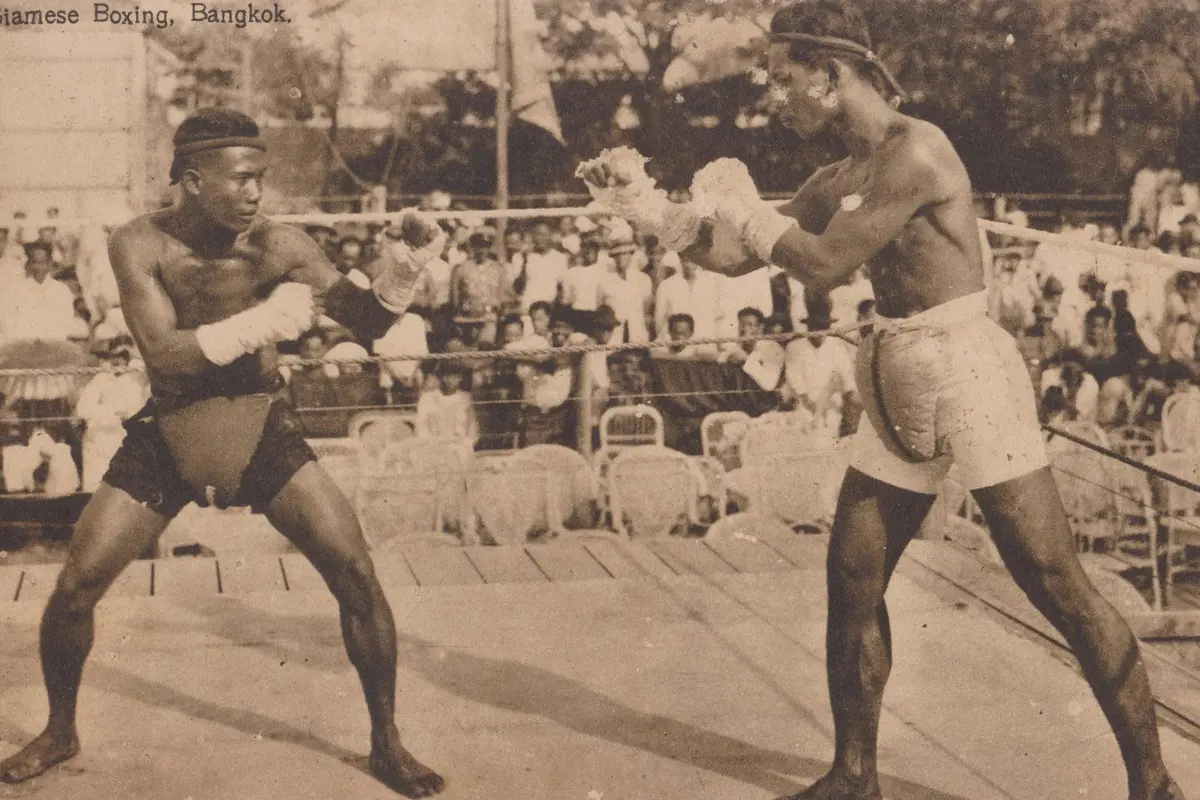
Referees, gloves, rounds and Western-style rings came in when King Rama VII modernised Thai boxing competitions in the 1920s and 1930s. Before that, fighters wrapped their hands and forearms in hemp rope.
In Western boxing the referee separates a clinch. In Muay Thai the fighters keep working in it, and it is where many knee and elbow strikes land. Watch for hands locked behind an opponent's head, pulling it down.
In amateur competition run under IFMA rules, a blow scores only when it lands clean; contact with a guard such as the glove, forearm, shin or foot earns nothing. A level score at the end goes to whoever landed the greater number of full-contact strikes.
Professional Muay Thai in Thailand has long been tied to gambling, which a Bangkok Post columnist once put at about 40 billion baht a year. Nothing on your ticket involves a wager, and every round makes sense without one.
Drawn from English Wikipedia, read November 2026: the pages on the clinch, Muay boran, the ching, the klong khaek, Sarama, the pra jiad, the wai khru ram muay and Muay Thai itself.
The ticket in plain words
The terms in plain words, so nothing surprises you at the gate.
Two Chiang Mai fight nights
Ring, ritual and market
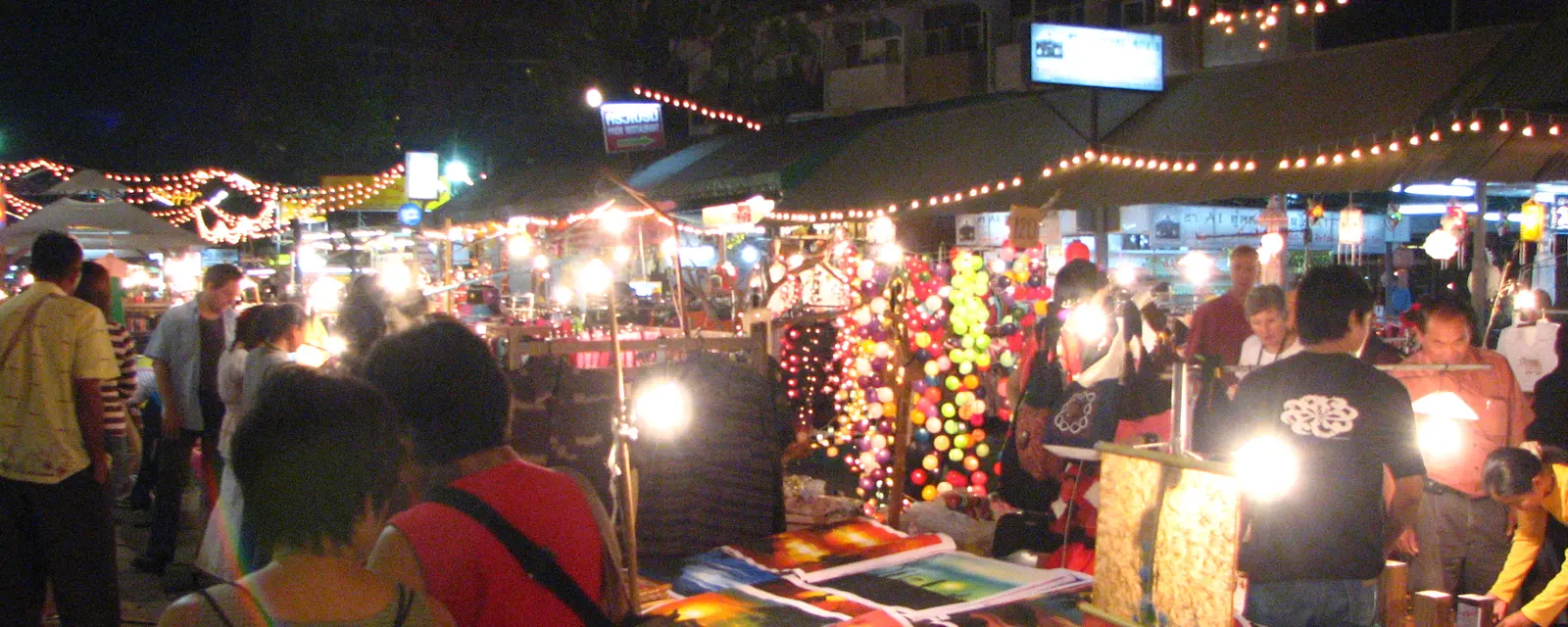
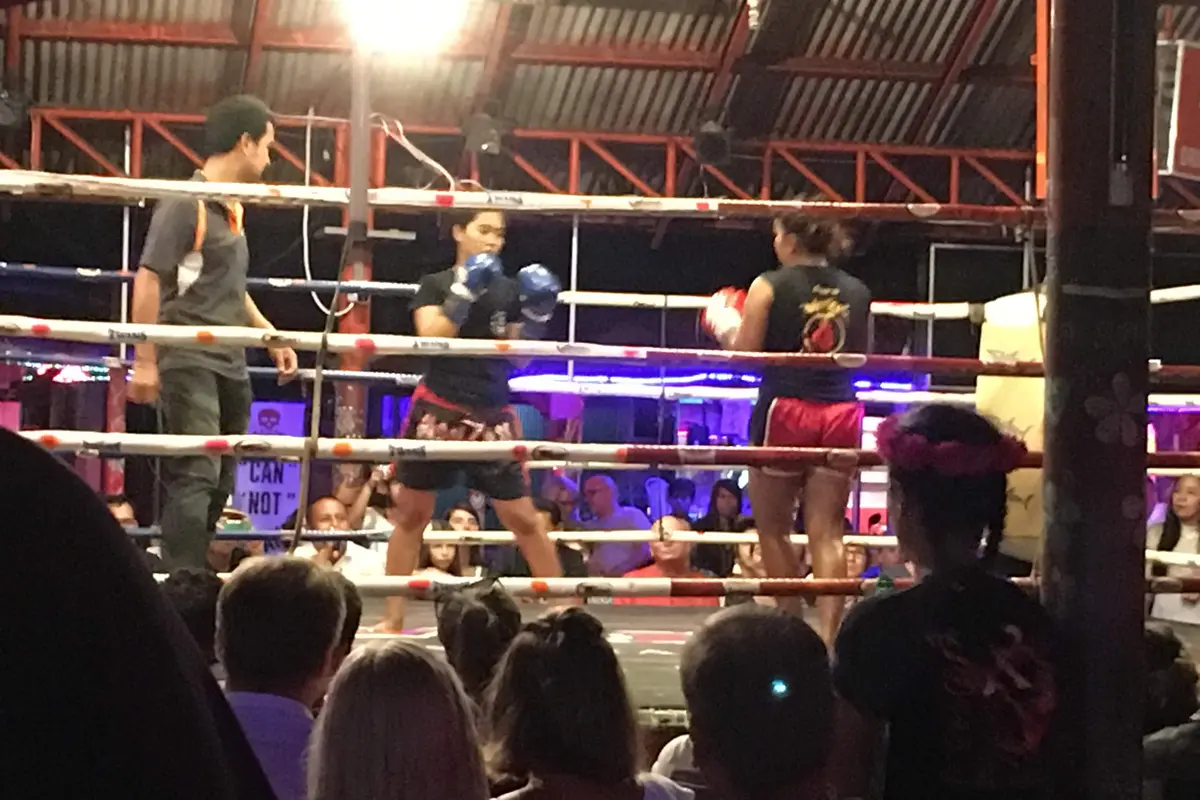
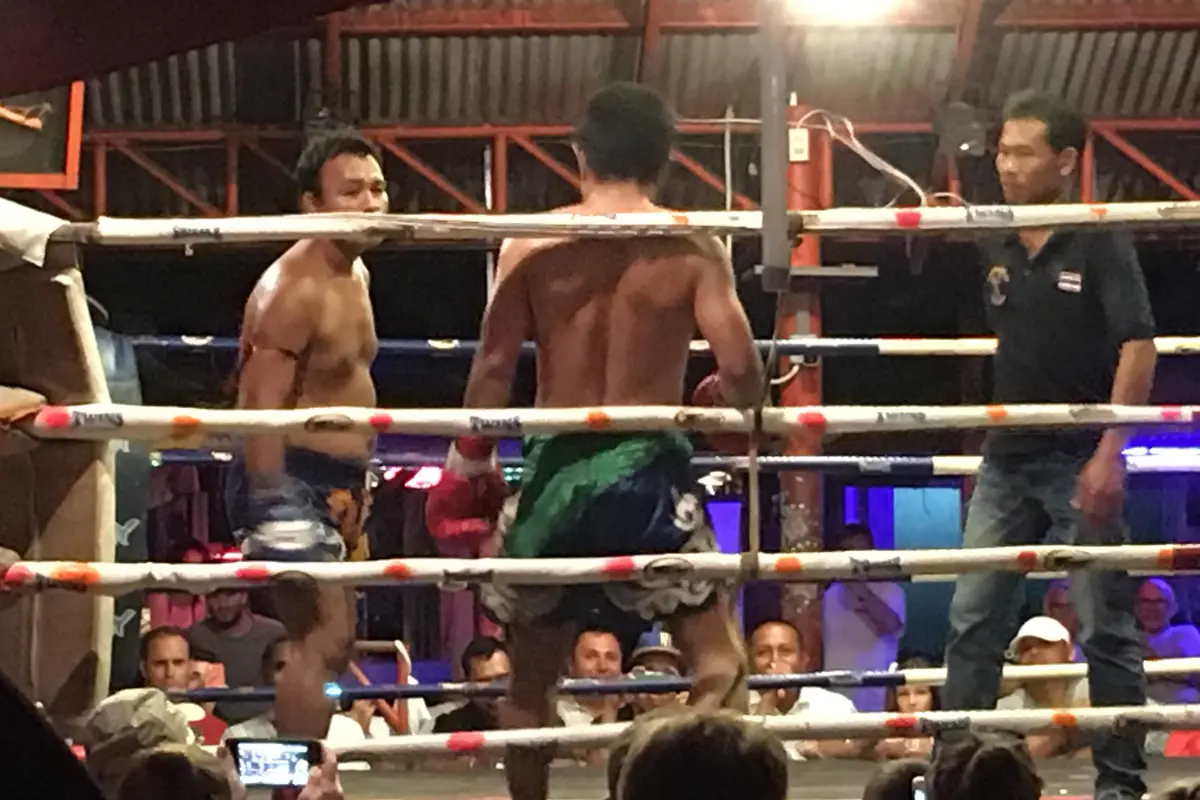
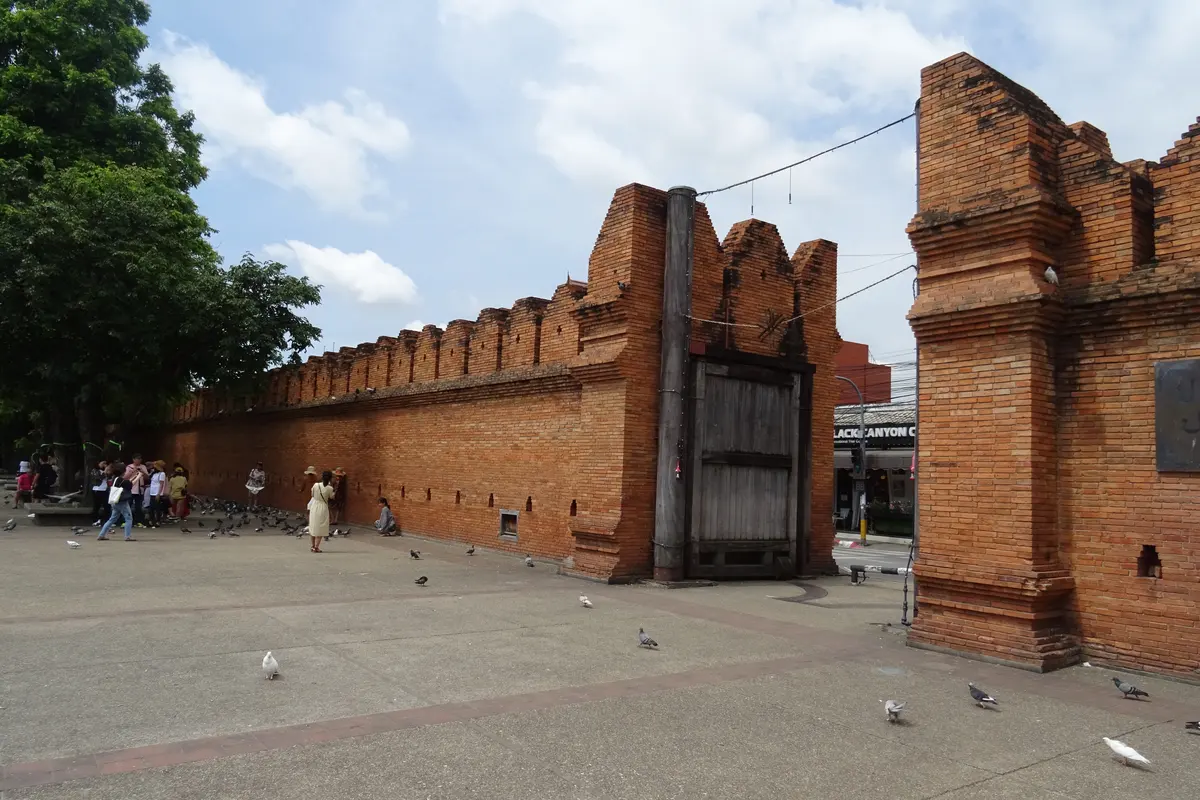
Lights over the bazaar stalls, bouts in open-sided rings, the cymbals that keep time, an old postcard of Siamese boxing and the gate at the old city's eastern edge.
Your fight night, and the days around it
The bazaar ring comes first. The second card is the city's other Muay Thai ticket, for comparison; the last two fill an afternoon in a kitchen garden and a morning with elephants. Each opens its own calendar.
A card of bouts at the ring inside Chiang Mai's Night Bazaar, from rising fighters to experienced ones. Child rates exist; food, drinks and transfers are extra; no re-entry.
Six to eight bouts at a stand-alone Chiang Mai stadium. Choose standard seating, ringside with a drink, or exclusive seats with drinks and snacks. Transport is extra.
About three and a half hours with an English-speaking instructor: a market visit, a curry paste pounded by hand and a meal in a kitchen garden. Transfers included; not for under-fives.
About five and a half hours: a van south to Mae Wang District, feeding the elephants and watching them bathe, with no riding. Not suited to anyone with limited mobility.
Other evenings and days around Chiang Mai
Finding the ring
Inside the Night Bazaar, which lies east of the old city's moat, between it and the Ping River, on Chang Khlan Road. Your voucher names the stadium; show it if you need directions inside the market.
You can walk from Tha Phae Gate, the eastern gate of the old city. The bazaar sits between the moat and the river.
Chiang Mai's songthaews, red pick-ups with two benches that locals call rot daeng, often work as shared taxis. Say Night Bazaar before you climb in.
Food and drinks cost extra and outside food or drink is not allowed in, so eat at the market before you reach the gate.
Your phone with the QR voucher, photo ID for anyone who might be asked, and money for food and drinks.
Child and infant rates exist, but the bouts are intense and the night is not suited to young children.
Read up before the first bout
FAQ
For most visitors who want to see live Muay Thai once in Chiang Mai, yes. You get a reserved seat at a ring inside the Night Bazaar and a card of bouts from rising fighters to experienced ones, each opened by the salute to live music. It is loud and informal, and food and drinks cost extra.
Both work: the stadium sells tickets at the gate too. Booking ahead is how you get a reserved seat for a set date, cancellable free until 24 hours beforehand, and you can pay later.
Fights run several nights a week. Open dates and their start times show in the booking calendar, so check the night you want there rather than relying on a printed schedule.
They can be. The card runs from rising fighters to experienced ones, and young fighters are common in Thai Muay Thai: in 2016, 9,998 children under 15 were registered with the boxing board of the Sports Authority of Thailand.
Child and infant rates exist, but the bouts are intense and the night is not suited to young children. Staff may ask for ID at the gate.
No. Leaving the venue ends the night on that ticket, so eat and wander the market before you go in.
No. Food and drinks are extra, and outside food or drinks are not allowed inside. The Night Bazaar's stalls are the easiest place to eat beforehand.
Access for wheelchairs and pushchairs is limited. Check with GetYourGuide before booking if step-free seating matters to your group.
No. This is an independent site written for visitors. The stadium, the promoter and the ticket seller don't run it and aren't connected with it; bookings go through GetYourGuide.
Cancelling is free until 24 hours before the card, and the GetYourGuide booking is then refunded in full.